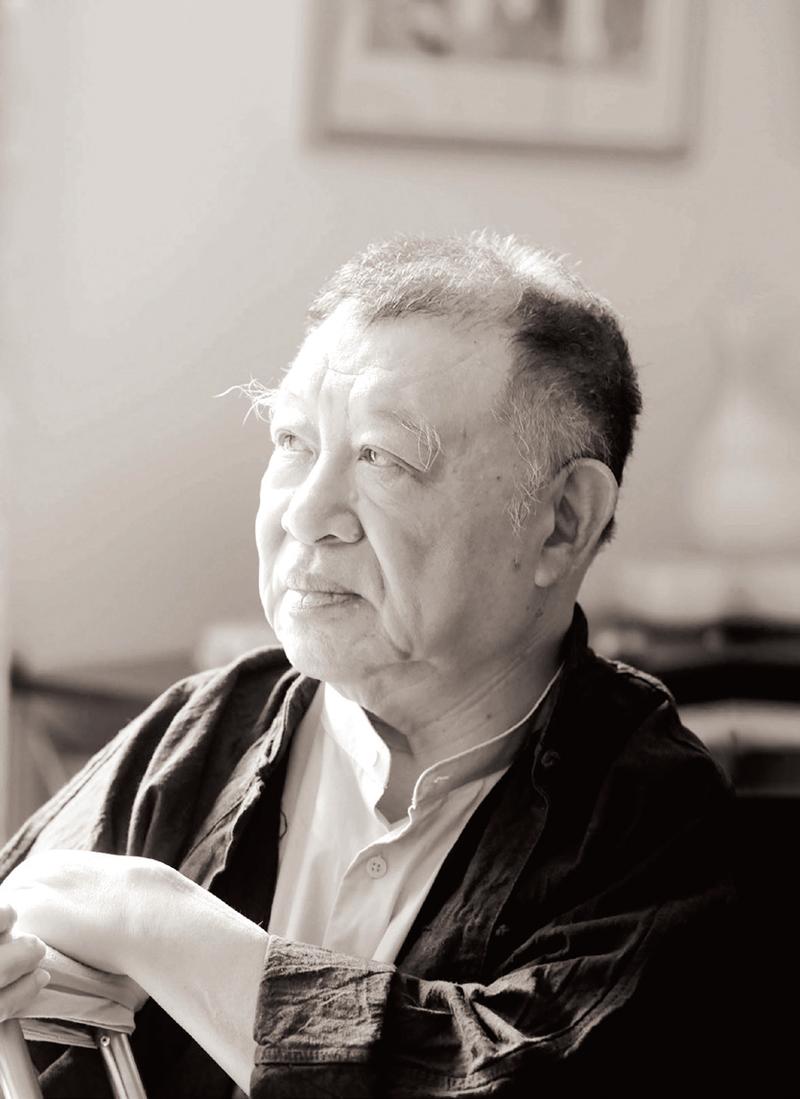
Hsu Cho-yun
Introduction
Hsu Cho-yun was a distinguished historian and professor emeritus at the University of Pittsburgh, celebrated for his profound scholarship in ancient Chinese social and cultural history. His academic pursuits and contributions have resonated with scholars and readers globally, particularly through his studies on early Chinese periods such as the Western Zhou, Qin, and Han dynasties. Hsu's work bridged the divide between scholarly research and public understanding, making the complexities of ancient Chinese civilization accessible to a wider audience.
Early Life and Education
Born in September 1930 in Xiamen, Fujian province, Hsu Cho-yun hailed from a family of literati. He spent his formative years in Jiangnan, a region known for its rich cultural heritage. In 1948, Hsu moved to Taiwan province with his family. His educational journey began at Taiwan University, where he nurtured his passion for the humanities. Subsequently, he pursued higher education in the United States, obtaining a PhD in humanities from the University of Chicago in 1962, an academic milestone that set the stage for his illustrious career.
Academic Career
Hsu Cho-yun's academic career was marked by his positions at prestigious institutions across the globe. After arriving in Pittsburgh in 1970, he quickly advanced to the status of full professor at the University of Pittsburgh by 1971, where he served for three decades. His teaching and lectures reached beyond Pittsburgh, encompassing institutions such as Duke University, Taiwan University, and the Chinese University of Hong Kong. Hsu's educational endeavors were characterized by a dedication to imparting knowledge and fostering intellectual growth among his students and peers.
Research Interests
Hsu Cho-yun's research interests were deeply rooted in the exploration of ancient Chinese history, particularly the social and cultural aspects of the Western Zhou, Qin, and Han dynasties. His scholarly work often delved into the agrarian economy of early China and the cultural dynamics that shaped its historical narrative. He was also keenly interested in the interplay between Chinese civilization and its neighboring cultures, reflecting on how mutual learning and transformation influenced the historical trajectory of China.
Publications
Among Hsu Cho-yun's notable publications are "Western Chou Civilizations" and "Han Agriculture: The Formation of Early Chinese Agrarian Economy (206 BC-AD 220)." These works underscore his comprehensive understanding of ancient Chinese societies and their economic foundations. Additionally, his influential book "China: A New Cultural History" serves as a testament to his ability to connect academic research with public discourse, offering readers insightful perspectives on China's cultural evolution.
Contributions to Sinology
Hsu Cho-yun's contributions to Sinology are both profound and far-reaching. His extensive research provided valuable insights into the complexities of ancient Chinese civilizations, challenging conventional narratives and encouraging new interpretations. His work emphasized the importance of inclusivity and interaction in Chinese cultural history, highlighting the reciprocal influences between China and its neighboring cultures. By examining historical realism through his studies, Hsu paved the way for a deeper understanding of China's cultural openness and its integrative nature.








